
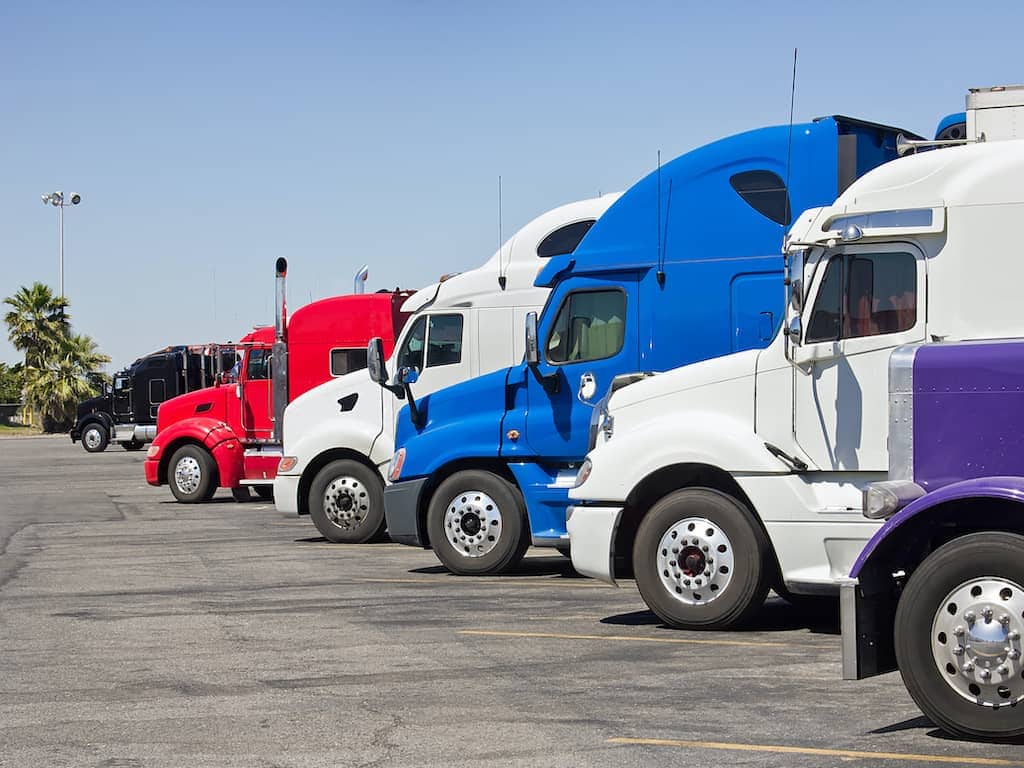
Choosing commercial truck insurance is not really about finding one magical “best” company.
It is about finding the carrier, agency, and policy structure that fit your operation without leaving dangerous gaps in coverage, filings, claims support, or day-to-day service. For Florida truckers, that matters even more because your policy often has to satisfy both business reality and federal filing requirements. FMCSA says insurance requirements vary by authority type, cargo, and vehicle use, and required proof of insurance must stay on file to avoid revocation proceedings.
So when people search for the “best” insurer, the smarter question is this: how do you compare trucking insurance companies in Florida in a way that actually protects the business?
Start With The Type Of Trucking Operation You Run
Before you compare any quotes, get clear on what you are insuring.
The right policy depends on whether you are an owner-operator, small fleet, household goods carrier, tow operator, dirt/sand hauler, expeditor, or another class of trucking business. Progressive’s Florida truck insurance page specifically notes that pricing and eligibility vary based on truck type, cargo, and business class, and FMCSA also makes clear that filing requirements depend on the type of operating authority and cargo involved.
That is why two carriers can both look “cheap” on the surface and still be built for completely different operations.
The Best Truck Insurance In Florida Is Usually The Best Fit, Not The Lowest Quote
A lower premium is attractive, but it is not enough on its own.
A strong trucking policy should match your actual operation on things like liability, physical damage, cargo, radius, trailer use, driver structure, and authority-related filings. Northland’s truck insurance materials, for example, emphasize commercial auto liability, cargo, physical damage, and additional trucking-specific coverages rather than treating trucking like generic business auto.
That is why the best truck insurance in Florida is often the policy that fits the operation cleanly and stays workable at claim time, not simply the one with the lowest monthly number.
Compare The Carrier, Not Just The Policy
When people compare commercial truck insurance in Florida, they often focus only on premium and limits.
But the insurer itself matters too. You should look at:
- Trucking specialization
- Filing support
- Claims access
- Responsiveness
- Whether the company actually writes truck business as a core product
For example, Progressive states that it insures a wide range of commercial vehicles, including semis and other large trucks, and Northland positions itself as a trucking-focused insurer with specialized commercial truck products and same-day filing support if requests are submitted on time.
Those differences matter because a carrier that truly understands trucking often handles paperwork, endorsements, and claims expectations differently than a more general insurer.
Claims Support Matters More Than Most Buyers Admit
A truck policy only proves its value when something goes wrong.
This is why 24/7 claims access, repair network support, and trucking-specific claims handling should matter in your comparison. Progressive advertises in-house claims and a network of heavy truck repair shops, while Northland states that claim reporting is available 24/7/365.
That does not automatically make one company better than another for every business. But it does mean that the “service after the accident” side should be part of how you compare commercial truck insurance providers in Florida.
Filing Capability Is A Big Deal For Interstate Carriers
If you operate under federal authority, the insurer’s ability to handle filings properly is not optional.
FMCSA says proof of insurance must be filed by the insurance company, not by the motor carrier directly, and it specifically identifies the required filing forms such as BMC-91 or BMC-91X for many for-hire carriers.
This is one of the most important differences between a carrier that is merely willing to quote you and one that is operationally equipped to support your authority. It should absolutely be part of how you compare truck insurance carriers in Florida.
Use Florida Licensing And Regulatory Checks
When comparing insurers and agencies, do not rely only on branding.
Florida’s Office of Insurance Regulation provides company and surplus-lines search tools, which is useful when checking whether an insurer is admitted, surplus lines, or otherwise part of Florida’s regulated insurance environment.
That does not tell you whether a policy is the best fit, but it does help when validating your Florida trucking insurance companies list or checking who is actually writing the business.
Progressive Trucking In Florida: Why People Look At It
Many Florida truckers compare Progressive because it has broad commercial trucking reach and a strong national presence.
Progressive’s Florida truck insurance page says it writes truck coverage statewide in Florida and identifies multiple Florida trucker classes it commonly insures. It also publishes a national average monthly premium range for new truck insurance customers, which gives buyers a general benchmark even though final pricing still depends on the operation.
That makes Progressive trucking in Florida a common comparison point, especially for owner-operators and small fleets who want a carrier with broad market presence and easier quote access.
Northland Insurance In Florida: Why It Comes Up So Often
Northland also comes up often because it is strongly associated with trucking-specific coverage.
Its materials emphasize trucking as a core specialty, and its product pages highlight trucking-relevant coverages like commercial auto liability, cargo, physical damage, roadside assistance, and filing support. Northland also states that it has provided trucking-related insurance services since 1948.
That is why Northland Insurance in Florida often enters the conversation for carriers who want a more trucking-specialized comparison rather than a broad commercial auto brand.
Agencies Matter Too, Not Just Insurers
A lot of buyers compare carriers but ignore the agency or broker helping place the policy.
That is a mistake.
Good commercial truck insurance agencies in Florida do more than collect quotes. They help structure the coverage properly, explain filing requirements, compare forms, and flag gaps before they become claim or compliance problems. FMCSA’s filing rules are a reminder that trucking insurance is not just a consumer shopping product. It sits inside a regulated operating framework.
The best agency relationship can make a major difference, especially when the operation grows or changes mid-term.
Top Rated Trucking Insurance In Florida Usually Comes Down To Operational Fit
There is no universal list of top rated trucking insurance in Florida that works for every carrier.
A one-truck owner-operator hauling general freight may need something very different from a small fleet hauling specialized cargo or a household-goods carrier with cargo filing needs. FMCSA even distinguishes filing requirements based on authority and operation type.
That is why “top rated” should mean:
- Right coverage structure
- Clean filing support
- Claim accessibility
- Service quality
- A quote that matches your actual business
Not just name recognition.
A Smarter Way To Compare
If you want to compare options more effectively, ask each carrier or agent the same practical questions:
Can you handle my required FMCSA filings?
Do you regularly insure my type of truck operation?
How do claims get reported and handled?
What trucking-specific coverages are included or optional?
How easy is it to add units, drivers, or endorsements mid-term?
Are you writing this on an admitted market or surplus lines basis in Florida?
Those answers will usually tell you more than the rate sheet alone.
Choose The Policy That Will Still Make Sense After You Bind It
The biggest mistake trucking businesses make is shopping only for the moment before binding.
The better move is to choose the policy that will still make sense:
- When you need a certificate fast
- When you add a truck
- When a claim happens
- When FMCSA filings must be corrected
- When your operation changes
That is the real standard for a good truck policy.
Choose Commercial Truck Insurance With More Than Price In Mind
The right commercial truck insurance policy should protect the business, support your filings, and still work when real trucking problems show up. That means looking past the cheapest quote and comparing insurers, agencies, claims support, and trucking fit more carefully.
If you want help comparing trucking insurance companies in Florida and finding a policy that actually fits the way your business runs, Alliance Insurance can help you review your options with a focus on coverage, compliance, and long-term usability instead of price alone.
FAQs
How Do I Compare Commercial Truck Insurance In Florida The Right Way?
Compare more than premium. Look at trucking specialization, claims support, filing capability, coverage fit, and whether the insurer regularly writes your type of operation. FMCSA filing support is especially important for regulated carriers.
Are The Best Truck Insurance Companies In Florida The Same For Every Trucker?
No. The best fit depends on truck type, cargo, authority type, and business structure. FMCSA itself distinguishes insurance needs by operation and cargo.
Why Do Progressive Trucking In Florida And Northland Insurance In Florida Get Compared So Often?
Because both are prominent names in truck insurance. Progressive emphasizes broad commercial truck coverage and national scale, while Northland positions itself as a trucking-focused specialist with trucking-specific coverages and filing support.
What Should I Ask Commercial Truck Insurance Agencies In Florida?
Ask whether they regularly insure your operation type, whether they handle FMCSA filing coordination, how they compare markets, and how they help with changes like adding units or drivers.
Can I Submit My Own FMCSA Insurance Filing?
No. FMCSA says carriers should not submit proof of insurance directly; the insurance company must submit the required filing.
How Do I Verify Florida Trucking Insurance Companies?
Florida’s Office of Insurance Regulation provides company and surplus-lines search tools that can help verify insurers in the Florida regulatory system.
Does The Cheapest Commercial Truck Insurance Usually Mean The Best Deal?
Not necessarily. A low premium can still be a bad fit if the policy misses important coverages, cannot support your filings properly, or becomes hard to manage during claims or mid-term changes.
What Makes A Truck Insurance Carrier Better For Florida Truckers?
Usually it is a combination of trucking specialization, responsive claims support, filing capability, and coverage that matches the actual business instead of a generic commercial auto setup.