
Tow Truck Insurance in Florida: Which Coverages a Towing Business Needs
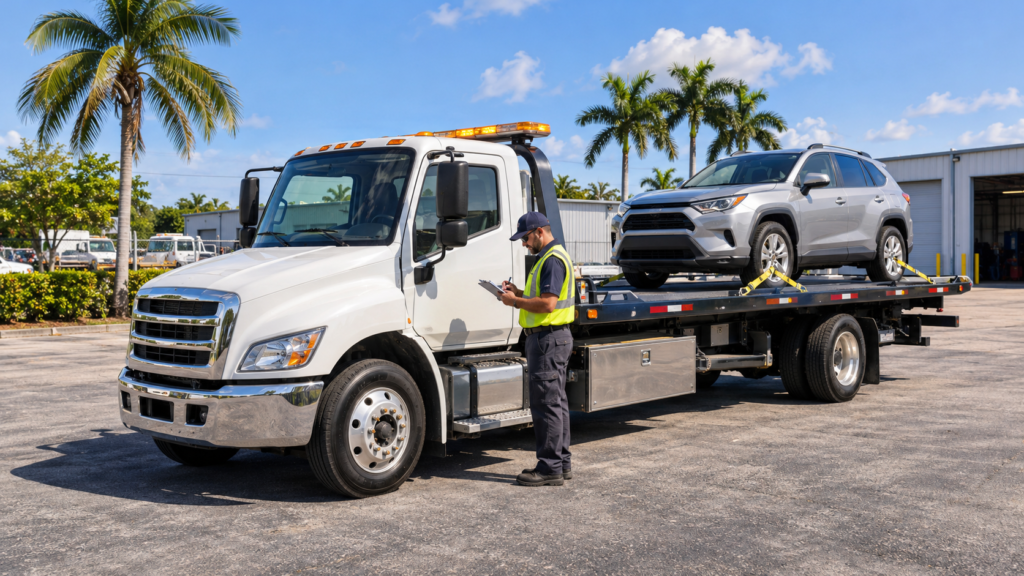
Towing is one of the few businesses where your work truck spends the day carrying someone else’s property. A flatbed hauling a customer’s SUV down I-95, a wrecker pulling a disabled car off the Turnpike, a lot full of stored vehicles waiting for owners to pick them up: each one is a different kind of risk. That is why tow truck insurance is built from several pieces instead of one simple policy. If you are starting a towing company in Florida or adding trucks to a growing one, this guide walks you through the coverages most towing businesses carry, how your type of work changes the mix, and the rules and contracts that can set your limits. Coverage always varies by policy and carrier, so treat this as a starting point for a conversation with your agent. Why Tow Truck Insurance Is Different From Regular Truck Coverage A standard commercial auto policy is built to protect your vehicle and your liability when you drive it. A towing operation adds two exposures that most truck policies do not address on their own: damage to the customer’s vehicle while it is on your hook or flatbed, and damage to vehicles while they sit in your care, custody or control at your yard. Those gaps are where many new operators get surprised. If a strap fails and a customer’s car rolls off the deck, or a storm floods your storage lot, your basic liability coverage may not respond the way you expect. Reading what each piece covers, and what it excludes, is the best way to avoid a costly gap. The Core Coverages in a Towing Policy Most Florida towing businesses build their program from the following coverages. Your needs may include more or fewer, depending on your operation. Auto liability This is the foundation of any commercial vehicle insurance program. It helps pay for injuries to other people and damage to their property when your truck causes an accident. Limits matter here, because a serious crash on a busy Miami-Dade highway can quickly exceed a low limit. Many towing contracts and motor clubs set their own minimums. Physical damage for your trucks Physical damage coverage protects your own tow trucks and equipment from accidents, vandalism and natural disasters, depending on the policy. Wreckers and rollbacks are expensive to repair or replace, and a truck sitting in the shop is a truck that is not earning. Our guide on physical damage truck insurance explains how this coverage works in more detail. On-hook or in-tow coverage On-hook coverage, sometimes called in-tow coverage, is designed for damage to a customer’s vehicle while you are towing or transporting it. It is one of the coverages that sets towing apart from other trucking. The way it is written varies: some forms cover only collision while in tow, while broader forms may include other causes of loss. Ask exactly what is included and what the deductible is. Garagekeepers coverage for stored vehicles If you store vehicles at your lot after a tow, garagekeepers coverage is designed to protect those vehicles while they are in your care. Think theft, vandalism, fire or a storm hitting the yard. For operators in South Florida, where heavy rain and hurricane season are part of life, it is worth asking how wind and flood are handled under this coverage. Depending on your business, you may also look at general liability for your yard and office, workers’ compensation if you have employees, and an umbrella policy for higher limits. How Your Type of Towing Work Changes What You Need Two towing companies with the same number of trucks can need very different coverage. Insurers look closely at what you actually do: Light-duty towing and roadside help: flatbeds and wheel-lifts moving cars, jump starts and lockouts. On-hook limits are often set around the value of typical passenger vehicles. Heavy-duty recovery: large wreckers recovering trucks, buses and loaded trailers bring higher values on the hook and more complex accident scenes. Rotation and police tows: work assigned by a city, county or agency often comes with its own insurance requirements and certificate rules. Private property and storage: more vehicles stored for longer periods put more weight on garagekeepers coverage. Long-distance or interstate transport: moving vehicles across state lines for hire can bring federal requirements into play. Your drivers, garaging location, radius, loss history and the value of your trucks also shape the price, just as they do for any fleet insurance program. Florida Rules and Contracts That Can Set Your Limits Florida does not set one insurance number for every towing company. Instead, your limits often come from the work you take on. Counties and cities that run wrecker rotation systems set the terms for the operators they designate. State law also requires a wrecker operator who stops to help a motorist without being called through an official system to disclose in writing whether the company carries at least $300,000 of liability insurance and at least $50,000 of on-hook cargo insurance (Florida Statutes 323.002). If you haul vehicles for hire across state lines, federal rules can apply as well. The Federal Motor Carrier Safety Administration sets minimum liability levels for for-hire carriers, starting at $750,000 for general freight carried in vehicles of 10,001 pounds or more (FMCSA Insurance Requirements). Motor clubs, dealerships and fleet accounts may add their own requirements on top. Gather those contracts before you shop, so your quote matches the limits you actually need. Frequently Asked Questions What insurance does a tow truck business need in Florida? Most towing businesses carry auto liability, physical damage for their trucks, on-hook or in-tow coverage for customer vehicles, and garagekeepers coverage if they store vehicles. The right limits depend on your work, your contracts and any rotation or motor club requirements. What is on-hook coverage? It is coverage for damage to a customer’s vehicle while it is being towed or carried by your truck. Forms vary, so check whether yours covers only collision or a broader